When to Change Your Brake Pads and Discs: A Canadian Driver's Guide
Your brakes don't get a second chance to work properly. Whether you're merging onto the 401 in Toronto, navigating a snowy mountain pass in Alberta, or braking hard for a deer on a rural Maritime road, your pads and discs need to perform every single time. Spotting the signs of brake pad and disc wear could help you catch problems before they turn into a safety issue or an expensive repair.
This guide covers how your braking system works, roughly how long pads and discs last on Canadian roads, and the specific warning signs that mean it's time for a shop visit.
Included in this article
How Brake Pads and Discs Actually Work
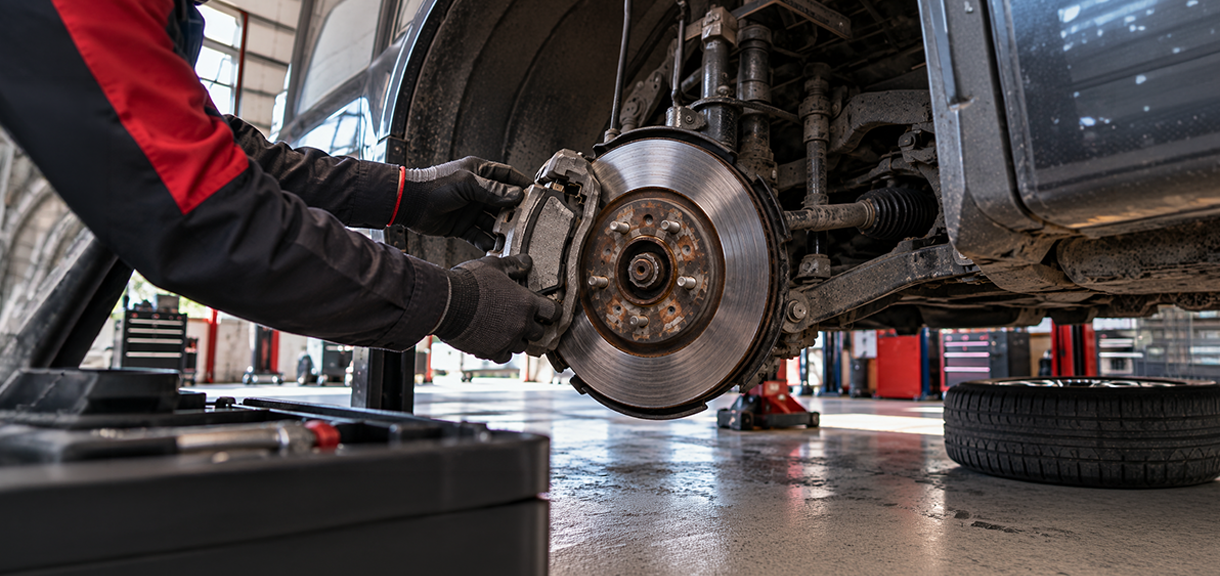
Every wheel on your vehicle has a brake disc (also called a rotor) paired with a caliper that holds two brake pads. When you press the brake pedal, hydraulic fluid pushes the caliper, clamping the pads against both faces of the spinning disc. That friction is what slows the wheel and your vehicle down.
It's a simple system, but it takes a beating. In Canada, winter driving adds extra wear: road salt and calcium chloride brine accelerate rust and corrosion on rotors, while stop-and-go traffic in slush and snow means more braking cycles overall.
How Long Do Brake Pads and Rotors Last in Canada?
There's no single answer here. It depends on your driving habits, vehicle weight, and where you drive most. City driving with frequent stops wears pads down faster than highway commuting.
As a rough guide:
Brake pads
:typically last 30,000 to 80,000 kmBrake discs/rotors
:typically last 70,000 to 150,000 km
Canadian winter conditions can shorten both lifespans, especially in provinces with heavy road salt use. That's why it's worth having your brakes visually inspected at every oil change or tire swap, rather than waiting for a scheduled "brake check."
7 Signs Your Brake Pads or Discs Need Changing
1. A Brake Warning Light on Your Dashboard
Most vehicles have a wear sensor that lights up once pads reach a minimum thickness (often around 3 mm). If this light comes on, don't ignore it. Book an inspection soon.
2. A High-Pitched Squeal
Many pads have a built-in metal wear indicator designed to make noise on purpose once they're getting thin. Consider it an early warning, not an emergency, but act on it.
3. Metal-on-Metal Grinding
Metal-on-metal contact means the pads are fully worn through. This isn't a "schedule it for next week" situation.Get the vehicle to a shop before you drive it again, since continued grinding can score or warp the rotor.
4. Visible Grooves, Cracks, or Thinning on the Rotor
Take a look through your wheel spokes. Deep grooves, rust pitting, or hairline cracks on the rotor surface are signs it may need resurfacing or replacement.
5. The Vehicle Pulls to One Side When Braking
This can point to a caliper sticking on one side or uneven pad wear, and it's worth having the whole system checked rather than just one wheel.
6. Vibration or Pulsing Through the Brake Pedal
A pulsing pedal, especially at highway speed, often means a warped rotor, which is common after repeated heavy braking or extreme heat-cool cycles.
7. Longer Stopping Distances
If your vehicle feels like it needs more distance or more pedal pressure to stop than it used to, worn pads are a likely culprit. This issue matters most on icy or wet roads where you already have less traction to work with.
How to Check Your Brake Pads Yourself
Park on level ground and engage the parking brake.
Loosen the lug nuts slightly, jack up the vehicle, and remove the wheel.
Locate the caliper and look through the opening to see the pad material pressed against the rotor.
Measure the pad thickness if the pads are under 3mm thick, it’s generally time to replace them.
Inspect the rotor surface for grooves, rust ridges, or cracks while you're in there.
Reinstall the wheel and torque the lug nuts to spec.
If you're not comfortable getting under the vehicle, most shops will do a quick visual brake check in a few minutes. Brake Inspections and Provincial Requirements
Canada doesn't have a single national vehicle inspection program. Instead, each province and territory sets its own rules under its Highway Traffic Act, and brake condition is typically assessed during safety inspections tied to vehicle resale, registration in a new province, or after a collision. Regardless of what your province requires, worn brakes are a safety issue first and a compliance issue second. Don’t wait for an inspection to address the problem.
FAQ
How much does it cost to replace brake pads and discs in Canada?
Costs vary by vehicle and province, but a full brake job (pads and rotors, one axle) commonly runs from around $250 to $500 CAD in parts and labour, with premium or performance parts costing more.
Can I drive with worn brake pads?
You can, but it's not safe. Worn pads mean longer stopping distances and can damage your rotors if ignored, turning an affordable repair into a costlier one. If you notice any warning signs, get it checked as soon as possible.
Do I need to replace all four brake pads at once?
Not necessarily all four, but you should always replace pads in pairs (both front or both rear) to keep braking balanced side to side.
Should I replace rotors when I replace pads?
It's generally smarter to do both at the same time. A brand-new pad against a worn, grooved rotor won't seat properly, and you'll likely be back in the shop again sooner than expected.
Why do my brakes squeak more in winter?
Cold temperatures, moisture, and road salt buildup on rotors can all cause temporary squeaking, even on healthy brakes. If the noise persists after a few stops or gets worse, it's worth having them inspected.
More Tips and Articles
View All Articles